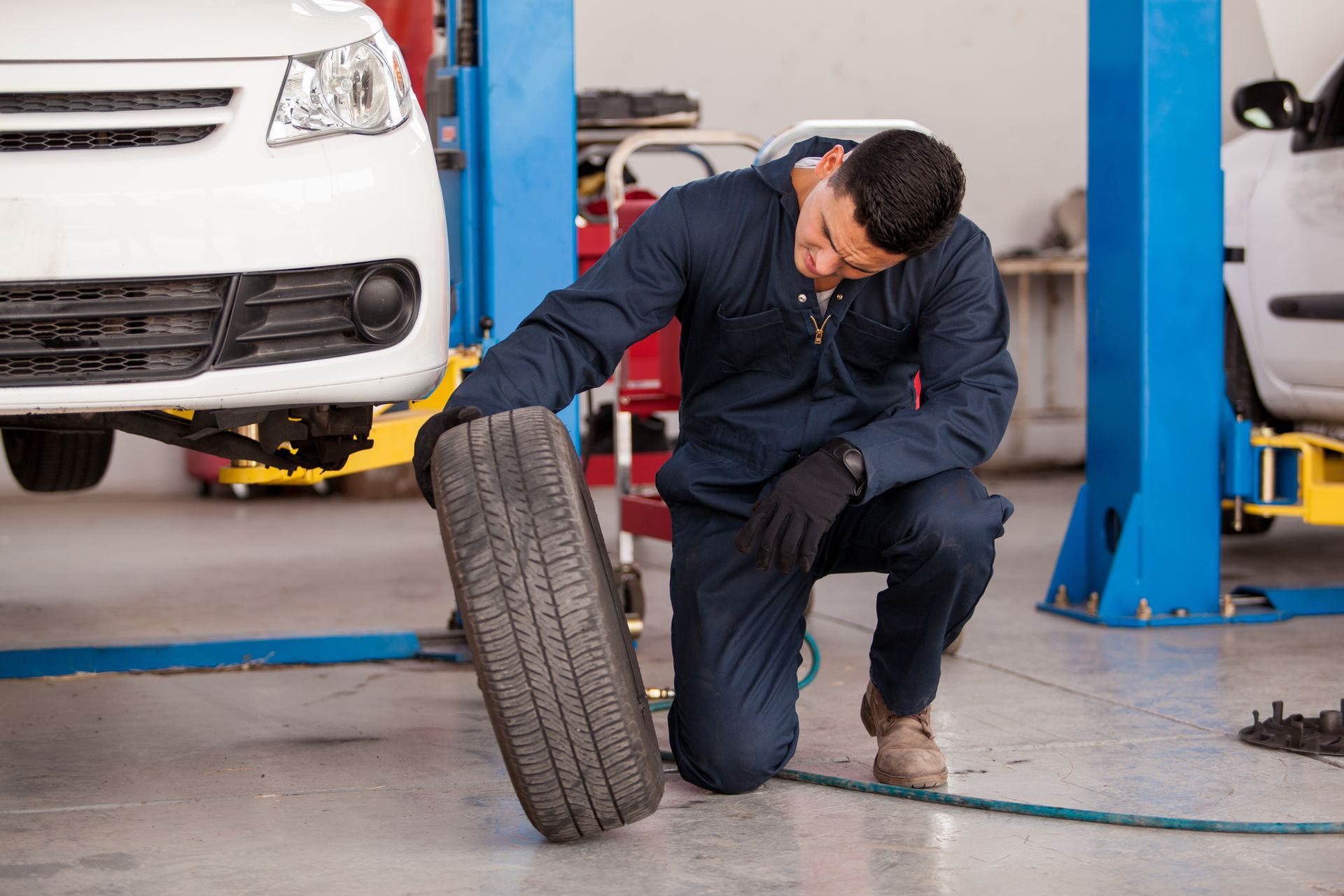
The tire looks fine from the outside, then someone points out the worn inner edge. It's frustrating to lose a tire while plenty of tread is left elsewhere, especially when the car hasn't felt much different to drive.
Before fitting another set, we want to find out what's wearing them that way. Low pressure, incorrect alignment, and loose suspension parts sometimes overlap. The tread gives us clues, but we need to look at the car as well as the tire.
Start With a Cold Tire Pressure Check
Check the pressures before driving, or after the tires have cooled as described in the manual. Find the vehicle's pressure label, usually in the driver's door opening. Remove the valve cap, press your gauge firmly onto the valve, and compare the reading to the label. Add air in small amounts and recheck before replacing the cap.
Why start there when the wear looks like an alignment problem? Pressure changes how the tire carries the car's weight, and a slow leak might have left it running low for months. If the same tire keeps needing air, we check the tread, valve, bead, and rim for leaks before treating it as a simple adjustment.
Wheel Alignment Changes How Tires Meet the Road
Camber describes how the wheel leans, while toe describes where it points compared with the other wheels. Too much toe scrubs the tread along the pavement. Excessive camber often loads one edge more heavily. Neither problem needs to look obvious from outside the car. We measure the angles and compare them with the wear. Then we look at why they're wrong.
Sometimes normal adjustment is all that's needed. Other times, a bent arm, changed ride height, or shifted mounting point explains the reading. Tell us about a curb or pothole impact so we can check the areas that took the hit.
Worn Suspension Parts Let the Wheel Move
Ball joints, tie rods, bearings, and control arm bushings help hold the wheel where it should be. When one becomes loose, the wheel moves during braking or over bumps. An angle measured while parked won't stay the same if a bushing lets the wheel shift on the road.
Can an alignment tighten up a loose joint? That part needs repairing first. We check for movement with the suspension loaded as the procedure requires, and look at the mounting points. A clunk or steering change during braking gives us a pattern to follow, so describe it even if it only happens occasionally.
Cupped Tires and Feathered Tread Need Different Checks
If the tread feels uneven or develops scalloped patches, we check damping, balance, wheel condition, and other possible causes. Feathered edges often bring toe settings and related movement into the checks. Worn tread also gets noisy, sometimes sounding much like a wheel bearing.
A speed-related vibration is worth describing separately. Balancing corrects uneven rotating weight, while alignment changes wheel angles. We look at the tire and wheel for damage before recommending either service. A bent rim or internal tire fault won't be fixed by adjusting the alignment.
Tire Rotation Won't Fix an Alignment or Suspension Problem
Rotation helps distribute normal wear across positions when tire sizes and design allow it. Moving a badly worn tire to another corner won't repair the pressure leak, loose joint, or alignment error that caused the damage.
Before the visit, make a note of:
- The mileage on the tire set
- Previous rotation and alignment work
- Which tire needs repeated air top-offs
- Recent impacts or suspension repairs
- Where the tread is wearing fastest
- Any pulling, clunking, or vibration
If a tire has a bulge, exposed reinforcement, or severe damage, stop safely and discuss transport. That's more urgent than deciding when to rotate it.
Fix the Tire-Wear Problem Before Installing New Tires
What happens if we put new tires on without fixing the cause? The same wear starts again. We plan mechanical repairs, alignment, and tire replacement together so the new set starts with solid support and the right settings.
Afterward, check pressures monthly and look across the tread when you can.
Keep the alignment report with the invoice. Bring the car back for a check after another hard impact or a change in steering. The earlier report helps us see what changed, but it can't prevent new damage.
Tire and Wheel Alignment Service at Masters Auto & Tire in Seattle, WA
Masters Auto & Tire in Seattle, WA, can check for uneven wear, pressure loss, and steering or suspension movement.
Schedule a tire-wear inspection before replacing the set so we can address what's wearing it out.